All Categories
Featured
Table of Contents
Real-time updates provided by mobile devices notify decision-making by using immediate presence into stock levels and order statuses. Wearable innovation, such as wise glasses and wrist-mounted gadgets, can be incorporated into warehouse systems to even more improve operational efficiency. IoT integrates with WMS and handles the location of items, routing of items within warehouse workflows, and helps to establish pull-based supply chains.
Take advantage of a nationwide network of high-performance partner storage facilities expand capacity, cut shipping expenses, and reach customers 12 days faster. Choosing the right storage facility management system for your service includes comprehensive research study and cautious consideration of numerous factors. Evaluating various WMS alternatives includes investigating vendors, thinking about customer reviews, and examining their track records in the industry.
Cloud-based WMS software, which generally adopts a software-as-a-service (SaaS) pricing model, provides flexibility and scalability as your company needs modification. Secret factors to consider when selecting a WMS include your service size, particular industry requirements, and special functional requirements. By carefully assessing these aspects, you can choose a WMS that aligns with your organization objectives and enhances your storage facility operations.
Executing a WMS can lead to considerable cost savings, improved performance, and much better customer service, making it an important financial investment for any company included in warehousing and circulation. The impact of a well-implemented WMS is profound.
Evaluating Legacy vs Automated Sync Tools
If you're seeking to take your warehouse operations to the next level, consider investing in a WMS tailored to your specific requirements. Welcome the future of storage facility management and enjoy your service thrive. A Warehouse Management System (WMS) is software that helps improve storage facility operations by tracking inventory and managing processes like receiving, keeping, picking, packing, and shipping.
This leads to more effective operations and less room for mistakes. Executing a WMS brings considerable benefits like cost savings, enhanced performance, and real-time inventory visibility, all while reducing errors and increasing client fulfillment. It's a wise relocation for simplifying operations! There are mostly 3 kinds of Warehouse Management Systems (WMS): standalone systems, cloud-based alternatives, and integrated ERP solutions.
Advanced innovations like AI and IoT substantially enhance WMS by using important information insights, improving operations, and assisting in more responsive supply chains. They also assist monitor conditions to lower dangers, making storage facility management smarter and more efficient. Rinaldi Juwono leads content and SEO strategy at Cahoot, crafting data-driven insights that assist ecommerce brands navigate logistics obstacles.
A Storage Facility Management System (WMS) is a software application developed to manage and enhance warehouse operations. It assists organizations track stock levels, handle choosing, packing, and shipping procedures, and enhance warehouse space usage. Here are some key functions and reasons WMS is important: WMS assists in real-time tracking of inventory levels, areas, and motions within the warehouse.
It simplifies order processing by automating selecting, packing, and shipping jobs. This results in much faster and more precise order fulfillment, enhancing customer fulfillment. WMS enhances storage facility space usage by suggesting effective storage places based upon product attributes, demand patterns, and storage capacity. By automating and enhancing storage facility processes, WMS lowers the requirement for manual labor and improves overall labor force efficiency.
Securing Your Retail Supply Chain for 2026
In general, a WMS is vital in boosting functional efficiency, minimizing expenses, enhancing customer support, and ensuring smooth warehouse operations.
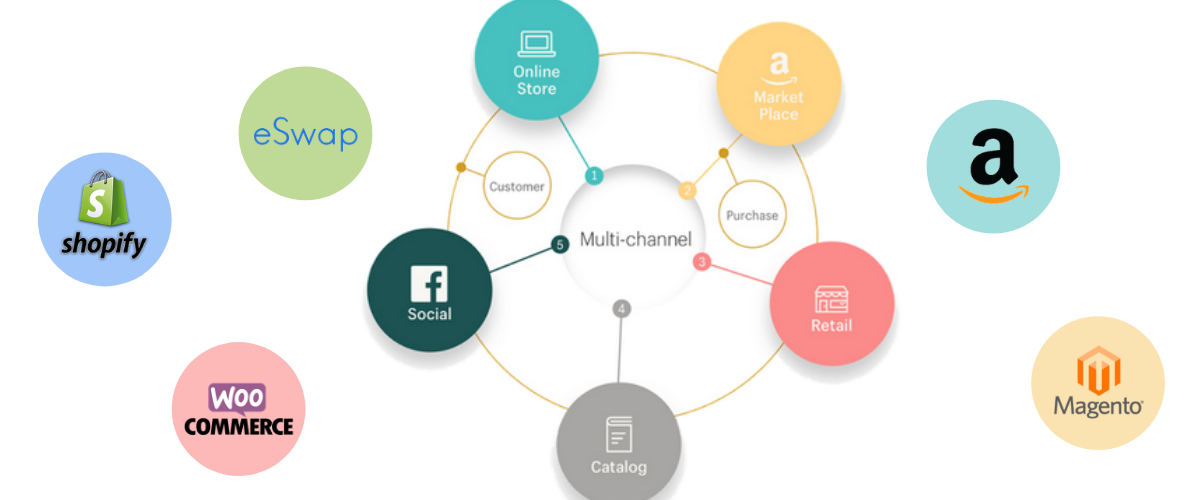
Linking Digital Inventory Across Multiple Retail ChannelsEvery item you buy onlineevery delivery that shows up on time, every stock count that's accuratedepends on software most consumers never see. That software is a warehouse management system (WMS), the operational brain that manages modern circulation and satisfaction operations. A warehouse management system (WMS) does much more than track inventory area.
It collaborates labor and automation, optimizes workflows in genuine time, and offers the exposure that turns a warehouse from a cost center into a tactical asset. In this guide, we'll discuss what a warehouse management system really does, the difficulties it fixes, how it works behind the scenes, and the core capabilities that separate fundamental inventory software from true storage facility management platforms.
Modern Inventory Control Software for High-Volume Sales
While the acronym is uncomplicated, what certifies as a real WMS isn't constantly clear. Fundamental stock tracking tools are in some cases called WMS platforms, but genuine warehouse management systems provide comprehensive functional control: inventory positioning, job orchestration, labor coordination, automation integration, and real-time efficiency presence. The difference matters since the capabilities gap in between fundamental stock software and business WMS platforms directly impacts functional efficiency, precision, and scalability.

Latest Posts
Automating Cross-Platform Inventory Workflows for 2026
Impact of AI Tech Redefines Retail Logistics
How to Scale Cross-Platform Sales in 2026